Modifying a Muscle Car Without Voiding the Policy
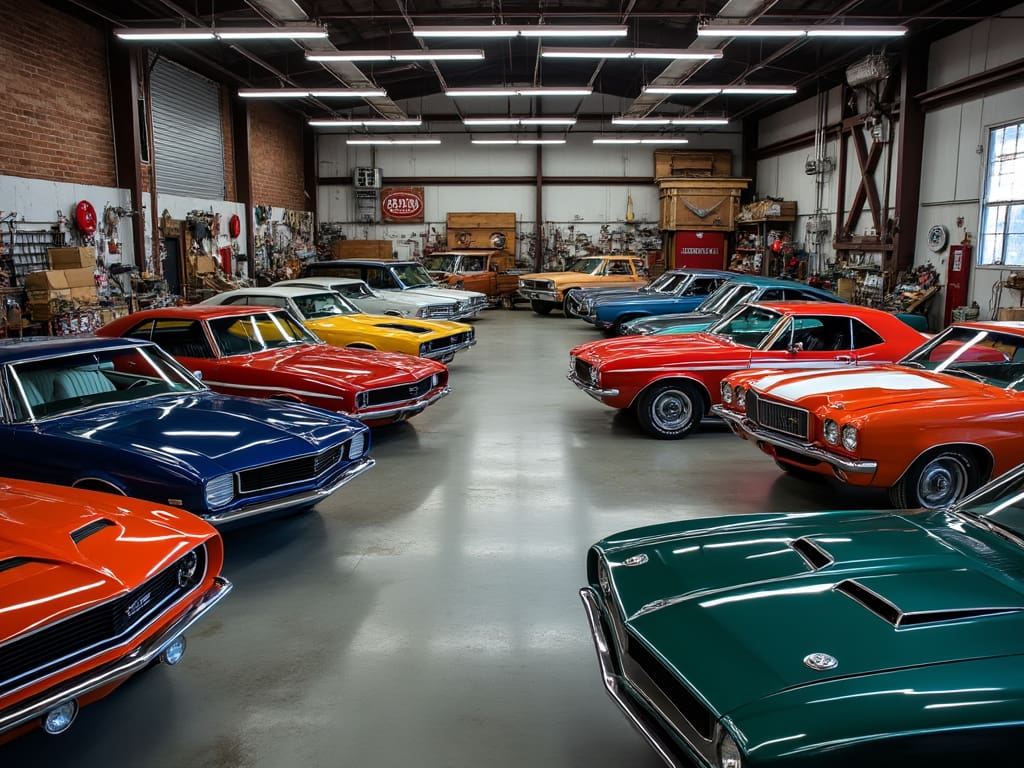
Most owners think about modifications in terms of horsepower and dollars spent. Insurers think about them in terms of disclosure. A muscle car running a stroker motor, sticky tires, and subframe connectors is not a problem for a carrier that specializes in this market — a car whose owner never mentioned any of it is. This is a guide to modifications on an otherwise-original muscle car: power adders, drivetrain, suspension and brakes, wheels and tires, paint, interior, and audio. If your car has gone further — a new drivetrain, a modernized chassis, the kind of build that needs its own paper trail — the underwriting problem is different enough that we cover it separately in Insuring a Restomod: Why the Build File Matters More Than the Build.
The One Thing That Actually Matters
The single most consequential decision you make about a modified muscle car is not which parts you buy. It is whether you tell your insurer about them before a claim, rather than letting an adjuster find them after one.
The Disclosure Duty Is the Whole Game
Every state handles insurance misrepresentation a little differently, but the structure is common: an application answer that turns out to be wrong, or a material fact never volunteered, can give the insurer grounds to treat the contract as if the true facts had been disclosed from the start. New York's version is a useful worked example because it's written down in plain language, not because the rule is identical everywhere. Under New York Insurance Law Section 3105, a misrepresentation is only legally "material" if the insurer's knowledge of the real facts "would have led to a refusal by the insurer to make such contract." Would this fact, honestly stated, have changed the deal — that's the test. Treat it as one state's articulation of a doctrine that exists in some form nationally, not as the rule governing your specific policy.
New York regulators also draw a boundary worth knowing: an insurer generally cannot retroactively rescind a policy once it has already provided the statutory liability coverage a third party is relying on. It can cancel going forward with proper notice, or raise the misrepresentation as a defense against the policyholder's own claim. Either way, the undisclosed modification can still cost the modified-car owner their own claim.
One more point, and we want to be precise about where it comes from: the materiality test as written turns on the fact itself, not on why you didn't mention it. An owner who genuinely thought a cold-air intake wasn't worth reporting and one who deliberately hid a supercharger are, under that test, in the same position if the fact would have changed the insurer's terms either way. That's a reasonable reading of how a materiality standard functions, not a specific ruling we're citing — but it's the assumption to build your disclosure habits around. When in doubt, disclose it.
What Actually Counts as a Modification
Not everything you bolt on rises to the level of something underwriting needs to know about. Condon Skelly, a specialty collector-car agency, draws that line explicitly in its own published guidance: window tint and stereo or security upgrades "often have little impact on an owner's ability to secure auto coverage." What does matter, in their words, includes structural changes to the frame or body — front or rear spoilers, custom wheels, tires or spinners, vertical doors, custom grilles, side pipes — and "significant performance enhancements like engine, steering, exhaust or suspension enhancements." That's a useful checklist for your own car: cosmetic add-ons that don't change how it performs or how it's built rarely need a phone call, but anything touching the frame, body structure, drivetrain, or suspension and braking system is where disclosure actually protects you.
How a Collector Carrier Screens a Modified Car
Hagerty publishes an unusually direct list of questions its own agents are trained to ask when deciding whether a vehicle fits its modified-vehicle program. As of an agent resource dated August 2026 — a snapshot of current practice, not a permanent rule, since eligibility guidelines get revised — the five screening questions are: is it a kit car or replica; does it have significant performance upgrades such as a blower, supercharger, or turbocharger; is the custom paint valued over $10,000; are there structural alterations to the body, chassis, or frame; and does it have hydraulics or a nitrous system.
Two of those factors deserve their own callout, because they get treated very differently by the same carrier. Hagerty states plainly that vehicles modified with "any nitrous components" do not fit its program — full stop, not a case-by-case judgment call. We want to be careful about how far that travels: this is Hagerty's own published position, verified against Hagerty's own materials, for Hagerty specifically. We did not verify a blanket nitrous exclusion across the rest of the collector-insurance market, and you should not assume every carrier treats it the same way. Superchargers and turbochargers get the opposite treatment from Hagerty — they trigger "additional scrutiny" during underwriting, not automatic decline. A big power adder is a conversation with your agent, not necessarily a dealbreaker.
Grundy and the Diminished-Value Problem
Grundy describes itself as the largest insurer of hot rods in the United States, and unlike carriers that restrict coverage to unmodified originals, Grundy writes modified engines, suspensions, and body work as a matter of course, subject to underwriting approval. Every Grundy collector policy is agreed value only — the company does not offer any other basis — which means the payout on a total loss is the number you agreed to at binding, not a number an adjuster argues about afterward.
The more distinctive fact, and one most owners of an otherwise-original muscle car have never heard of, is Grundy's coverage for diminution of value tied to loss of originality. In the company's own words, Grundy "has always recognized the need to account for the diminution of value of significant collector vehicles that result from insured events, such as collision or theft." In practice this addresses a numbers-matching part destroyed and replaced with a non-original one during a covered repair, a low-mileage car that accumulates miles after a theft recovery, or damage to documented, historically significant restoration work. It matters here because the flip side is real: a fully covered repair that swaps an original component for an aftermarket one can quietly reduce what a numbers-matching car is worth.
Be precise about the mechanics, though — this is not an automatic add-on payment. Grundy's own materials put the burden of proof on the owner, who has to supply proof of the diminished value through expert appraiser documentation. It's a real coverage, genuinely useful for a matching-numbers muscle car, but it's a claim you build, not a check that shows up on its own.
American Collectors and the Racing Line
American Collectors' classic-car policy is explicit about one exclusion in particular: coverage does not extend to a vehicle "used for racing, timed events or driver's education." Their eligibility also requires the vehicle to have collector merit and be appreciating in value, driven on a limited basis, with every driver holding at least five years of licensed experience and no more than one moving violation or at-fault accident in three years. There's also a household rule worth knowing if you're shopping this carrier: they require one regular-use vehicle for every licensed driver in the household, so the muscle car can't be anyone's only car.
Generalize that exclusion carefully — the exact wording is carrier-specific — but the clause pattern recurs across the collector-insurance market. Typical language excludes a loss while the car is "operating on a surface designed or used for racing," "participating in a high performance driving or racing instruction course or school," or "preparing for, practicing for, used in, or competing in" an organized racing or speed event. An industry rule of thumb captures the practical effect: if you're being timed, you're racing — which is why an autocross outing, not just a road-course track day, can trip this exclusion even though nobody there would call it "racing." If your car sees any timed event, ask your agent directly how your policy treats it rather than assuming a Sunday autocross is obviously fine.
Safety Equipment Cuts Both Ways
It's tempting to assume anything that makes a car safer — a roll cage, five-point harnesses, bigger brakes — can only help with underwriting. That's not quite right. Visible racing safety equipment, a roll cage especially, can function as an underwriting red flag independent of how the car is actually driven, simply because it reads as evidence of track intent rather than street use. To be exact about what we can and can't confirm: Hagerty's own published eligibility factors above don't mention roll cages one way or the other, and we found no carrier that publishes a specific ban on cages in its own materials. Treat a cage as something to disclose and discuss up front, not an automatic problem — but don't assume it reads as neutral, either. Upgraded brakes sit on more solid ground: nothing in the guidance we reviewed treats a brake upgrade as a negative signal the way nitrous or a cage can be.
Emissions and Legal Compliance
Removing a catalytic converter without installing an approved replacement is federal tampering under the Clean Air Act — the 1990 amendments extended that prohibition to vehicle owners, not just manufacturers and dealers. Civil penalty figures for tampering exist and are periodically adjusted for inflation; we found inconsistent numbers across secondary sources during research and are deliberately not printing a dollar figure here rather than risk stating a stale or wrong one. Check the current EPA penalty schedule directly if this matters to your build.
A related but separate question is whether an emissions-illegal modification creates a problem specifically with your insurance, as opposed to with the EPA or your state's registration authority. We did not find carrier language directly tying a coverage decision to a missing catalytic converter, and we're not going to imply a connection we can't back up. What we can say is that operating a vehicle in an illegal state at the time of a loss is generally not a strong position to argue from with an insurer, even absent a specific clause naming emissions tampering.
On CARB Executive Order numbers specifically: an EO number on an aftermarket power adder or exhaust component is a legitimate emissions-compliance certification, and having one is good practice for legal registration, particularly in California or another CARB-following state. We looked specifically for evidence that any collector carrier checks for EO numbers during underwriting or claims, and found none. Keep EO documentation for your own legal protection — not because an insurer is asking for it.
Documenting the Work for Underwriting
Hagerty's own requirement here is specific and verifiable: a custom or modified vehicle needs four photos submitted — the full vehicle, the engine, the interior, and the trunk or bed if it's a truck. That's a low bar to clear and a good baseline even if your carrier doesn't ask for exactly that.
Beyond photos, keep purchase and installation receipts for every modification, and get the car appraised after major work is done rather than relying on a pre-modification valuation. That agreed value should reflect the car as modified, not the stock baseline it started as — see our companion piece on agreed value versus actual cash value for how that basis works. One thing we won't tell you is required: a dyno sheet. We found no carrier that lists a dyno printout as a documentation requirement — it's reasonable to keep on hand to substantiate a horsepower claim to an appraiser, but that's an owner's best practice, not a box any insurer is asking you to check.
Where Modified-Car Claims Actually Fail
The mod surfaces at inspection, not at binding
An adjuster spots an aftermarket part during a post-loss inspection that was never disclosed on the application. That's the exact fact pattern the material misrepresentation doctrine exists to address, and it's the single most avoidable failure on this list.
A timed event nobody called "racing"
An autocross day, a car-club time trial — events that don't feel like competitive racing can still trip the racing/timed-event exclusion that runs through this entire market.
No paper trail to support the value
Without receipts, photos, or an appraisal reflecting the car as modified, there's nothing forcing a settlement toward what you actually put into the car — or, on a numbers-matching car, toward a legitimate diminished-value claim.
Racing safety gear read as racing intent
A cage or harnesses installed for peace of mind can be read by underwriting as a signal about how the car is actually used, whether or not that's true. Disclose it and have the conversation before it becomes a claim-time surprise.
Before You Order the Parts
- Call your agent before the work starts, not after — describe the modification plainly, including horsepower changes and anything involving forced induction, nitrous, or a cage.
- Ask specifically how the policy treats any track, autocross, or timed event you plan to attend, even informally.
- Keep receipts and take photos as you go — full vehicle, engine, interior, and trunk or bed, at minimum.
- Get an updated appraisal once major work is complete, and update the agreed value to match the car as modified.
- If the car is numbers-matching, ask your agent whether your carrier offers diminution-of-value coverage and what proof it requires.
- Keep emissions-compliance documentation, including any CARB EO numbers, for your own legal protection even if your insurer never asks for it.
Building a Modified Muscle Car? Let's Get the Coverage Right.
We place coverage with carriers that actually write modified vehicles, and we'll tell you plainly which mods need a phone call before you make them. Tell us what's on the car, and we'll tell you what needs disclosing.
Sources
- New York Department of Financial Services, Office of General Counsel Opinion No. 06-12-11 — material misrepresentation and voiding/rescission of a motor vehicle policy under New York Insurance Law Section 3105 and Vehicle and Traffic Law Section 313.
- Hagerty, "Modified Vehicles" (agent guidance) — nitrous exclusion, supercharger/turbocharger scrutiny, four-photo documentation requirement.
- Hagerty Agent, "The Modified Vehicle Market" — five-factor eligibility screen, accessed August 2026 and treated as a dated snapshot.
- Grundy, "Insurance 101" — agreed-value-only policy structure, diminution-of-value and loss-of-originality coverage, owner burden of proof via appraisal.
- Condon Skelly, "What Modifications Matter for Specialty Auto Insurance" — named list of modifications relevant to underwriting versus minor cosmetic changes.
- American Collectors Insurance, classic car policy materials — racing/timed-event/driver's-education exclusion, driver and household eligibility requirements.
- U.S. Clean Air Act (1990 amendments) — tampering prohibition applied to vehicle owners for catalytic converter removal.
Carrier eligibility rules, exclusions, and published coverage terms change, and this article reflects publicly available carrier materials as of August 2026. It is not legal or insurance advice. Your own policy, endorsements, and state law control — confirm current terms directly with your carrier or agent before you rely on anything above.